Produced by high-frequency switching power supplies, wireless communication equipment, high-power frequency converters, and other devices.
Low frequency or high-frequency noise transmitted through electrical connections such as power cords and cables.
Transient interference caused by fluctuations in power grid load or the start/stop of high-power equipment.

1. Continuity of metal sheath
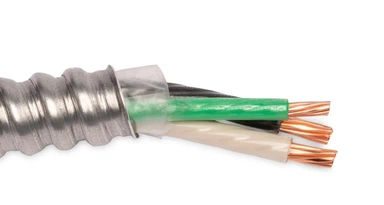
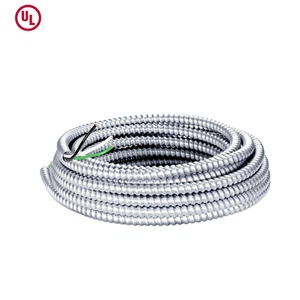
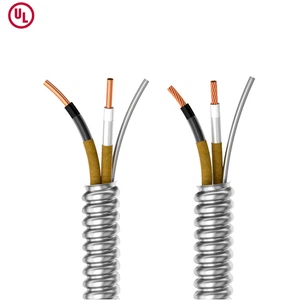
The metal sheath of MC cables is usually a spiral wound aluminum alloy or steel strip. Compared with braided shielding or aluminum foil shielding, the shielding effect of this structure is poor, especially in high-frequency EMI environments, where the gap between the spiral winding may become a channel for EMI leakage.
2. The impact of grounding methods
The metal sheath of MC cables usually needs to be properly grounded, otherwise the shielding effectiveness will be greatly reduced. If the sheath is well grounded, it can reduce the impact of low-frequency EMI to a certain extent. However, for high-frequency interference, the shielding effect is limited due to the gap and high impedance of the sheath itself.
3. Comparison with EMT pipeline
EMT (Electrical Metallic Tubing) conduit is another common cable protection method, which is more enclosed than the metal sheath of MC cables and can provide better shielding effect. In environments with high EMI requirements, it is usually recommended to use EMT+separately shielded cables instead of using MC cables separately.

1. Ordinary commercial buildings
In the low-voltage distribution system of commercial buildings, the main function of MC cables is to provide physical protection and comply with fire safety requirements. Due to the relatively weak electromagnetic environment of commercial buildings, MC cables are generally able to meet the demand. But if it involves EMI sensitive environments such as computer rooms and data centers, MC cables may require additional shielding measures.
2. Industrial control system
In industrial environments, equipment such as frequency converters and motor drivers can generate strong electromagnetic interference. At this point, if the MC cable is used for power lines, its metal sheath can provide some low-frequency shielding capability. But for control signal lines, the shielding ability of
3. Medical equipment environment
4. Data center and communication system
Data centers and communication rooms require high-quality EMI shielding to prevent data loss or signal interference. Although MC cables can be used for power lines, stronger anti-interference solutions such as shielded twisted pair (STP), coaxial cables, or fiber optics are still required for data transmission.
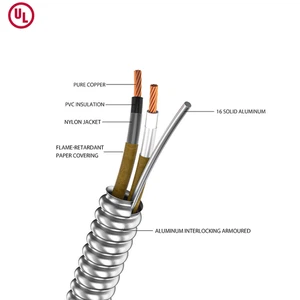
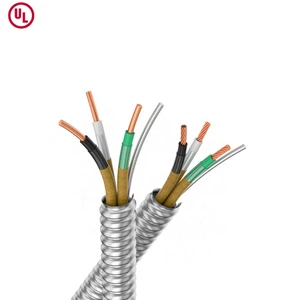
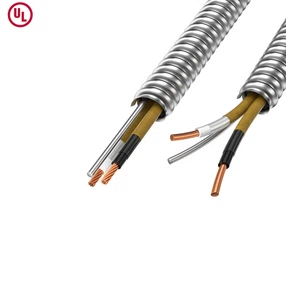
Although the metal sheath of MC cables can reduce low-frequency EMI in some cases, if higher shielding performance is required, the following measures can be taken:
1.Additional shielding layer: Add independent foil shielding or braided shielding layer inside the MC cable to improve the high-frequency EMI suppression capability.
2.Double layer sheath: using thicker metal sheath or double-layer structure to improve shielding continuity.
3.Proper grounding:
4.Using EMT conduit:
The metal sheath of MC cable can indeed provide a certain degree of EMI shielding, especially in terms of low-frequency interference, which has certain advantages. However, due to the gaps in its spiral structure and limitations in grounding methods, MC cables cannot effectively shield high-frequency electromagnetic interference. In application environments with high EMI requirements, such as medical, data center, and industrial control systems, it is recommended to use specialized shielded cables or additional shielding measures to ensure system stability.